Friday, September 28, 2018

GOOD NEWS TO PASS ON!

Last evening at the historic Mother House on Stevens Avenue, Greater Portland Landmarks held their 2018 Preservation Awards Celebration and Annual Meeting and I was honored to receive a Preservation Leader Award.  Nominated by Joseph Dumais, from the City of Portland Cemeteries, I was totally amazed and surprised to hear I would receive such an honor.  However, it is a recognition which I need to share with all of you who supported this recovery project of the Grand Trunk Cemetery from its inception in 2010, and continue to do so to the present.

Although, in comparison to so many of the outstanding projects, our tiny cemetery and its preservation is an important piece of Portland history and deserves the recognition  So, I share this moment with the Friends of the Grand Trunk Cemetery, the Girl Scouts of Machigonne Service Unit who continue the legacy of Samantha Allshouse and Kayla Theriault, the wonderful, living relatives of some of the souls interred at the GTC, the Portland community,  and those of you who know the importance of preserving and caring for our ancient cemeteries who follow this blog.


Here is the write-up included on Greater Portland Landmark's web site.  I will include the link for you to read about each of the projects which received awards for your interest.  www.greaterportlandlandmarks.org.


I was very happy to have my husband, Joel who has always supported this recovery project from the beginning, Lynda Allshouse, Patricia Theriault, Norma and Benjamin Sawyer, Robert McMann and Joe Dumais present for the awards ceremony.  It was a pleasure to meet a number of people who seemed really interested in finding the cemetery, and I was pleased to tell them about the wonderful, newly installed street sign.  Here are photos:

On the day of installation of the lovely new sign
with crew members from Portland Cemeteries

The sign sits adjacent to the school on city property
and faces out on Presumpscot Street


Sometime, in the future, another interactive sign will be placed in the cemetery and replace the present kiosk and map.  I will keep readers informed,  and hopefully, we will hold an unveiling event and invite all to gather once more at the Grand Trunk Cemetery.

Finally, as has been our custom since 2011, we will hold our annual Cleanup and Planting Party on Sunday, October 28th at the cemetery, sponsored by the Portland Girl Scouts of Machigonne Service Unit and the Friends of the Grand Trunk Cemetery.  This is always an opportunity to provide a service to the GTC while enjoying the company of good people, and having fun.  

This year, additional activities have been planned to celebrate the 158th birthday of Juliette Gordon Low, Girl Scouts founder.  I hope those of you in our local area will join us,  and visit the Grand Trunk Cemetery.  You may even encounter the ghost of Miss Low wandering through the burial ground!  
Happy Halloween!


You may be interested in a new feature on Friends of Grand Trunk Cemetery Facebook page:  On this day.....records particular deaths for those interred at the GTC during the month. facebook.com/FriendsofGrandTrunkCemetery

Tuesday, September 18, 2018

From the Town of Gloucester at Cape Ann to the Town of Falmouth at Back Cove, Part II


Personal Reflection:  Weaving Threads into the Tapestry


     What an adventure this has been following the journey of Isaac Sawyer and others whose personal histories began in Gloucester and ended in Falmouth (Portland).  I have learned more about the city of my birth, and now, the city I adopted as home forty years ago, than I ever knew.

Much of the early history of both Gloucester and Falmouth have similarities.  Both are coastal towns which later, would become dependent on the ocean and water-ways for shipping lumber and goods,  and build sailing vessels, important to their prosperity; not, at the beginning.  Both towns, in their pre-history would have been home to native groupt who visited the coast to fisht during the summer months, but later, would become 'enemies' to the European settlers, and would be dessimated by contracting European diseases. 

Both towns, would be dependent on their 'planters', yeoman who would establish farms for their sustainance and would clear heavily forested areas to build their homes, gather marsh grasses for bedding their cattle and sheep, and thatch for their roofs, and hunt and fish along the rivers to suppliment their diets and feed their large families.  Both towns, would suffer loss during the European conflicts between England and France and would suffer destruction during the Revolutionary War.

     The early pioneers of Gloucester and Falmouth were independent and self-reliant individuals determined to create and maintain a life for themselves and their families, qualities which they shared with their fellows throughhout New England.

Early Map of New England, dated 1703


In New England the community and social idea, controlled and directed by provincial authority, was present from the beginning.  Groups of like-minded families organized themselves into "church and town," acquired a tract of land about six miles square, settled thereon according to definite rules, and proceeded to work out for themselves and orderly agricultural community.  The New England town was a carefully planned society."  The system, as originally conceieved and administered by the Massachusetts General Court prevailed throughout the province of Massachusetts Bay, in its offshoots, Connecticut and New Hampshire, and in its colony of Maine.

Since church and town were coeval and coextensive, the community formed around meeting house and village green.  Land was divided by lot into village plots fronting on the green, and outlying portions for farming, grazing and wood lots.  Other tracts were set aside for the common use of all. and still others, held for future needs. 

Taken from:  "The New England Town:  A Way of Life" 
by Carl Bridenbaugh
This was true for the first permanent sttlement of the Town of Gloucester when in 1642, the Massachusetts Bay Colony laid out the rocky land adjacent to the Annisquam River, and named it Gloucester, which received the name Cape Ann, was divided between three areas:  Jeffryes Creeke (Manchester), Gloucester (included Rockport; than called Sandy Bay, and Ipswich (including Essex).

The new permanet settlement focused on the Town Green area, an inlet in the marshes at a bend in the Annisquam River,  The area is now the site of Grant Circle, a large traffic rotary at which Massachusetts Route 128 joins the major city street,Washington Street (Route 127). The settlers built a Meeting House and focused the nexus of their settlement on the 'island' for nearly 100 years.
           "The new settlers homesteaded and fished, but the area was so thickly wooded, so in the beginning, lumber, not fish, was Gloucester's primary export. :It was so important, that in 1667, the settlement area that was to become Rockport, over a century later, was forbidden in order to protect the forest."  History of the Regionhttps.://capeannchamber.com/history-of-the-region/

     One of the early pioneers of Gloucester was Thomas Skillen who is significant to the story of Isaac Sawyer and his farm at Back Cove.  It's apparent from early Gloucester records, and from his mention in the Babson book, that he was in Gloucester before 1643.  This written into the Gloucester Archives regarding the 'Old Yard Bridge Street.'

Upon the 8th of the 12th mo. 1643
It is ordered that at the end of Lotts, Viz, Mr. Blynmans, Thos. Jones, Thos. Kents, and Thos. Skillings, betwixt, and old meeting house place, shall be half an acre, laid out for a common burial place, & that the town's men, from 16 years, and upwards, shall turn out, and build a stone wall, around it.


      On or about 1658, six men from Gloucester, early pioneers of the town would leave and move up the coast to the settlement at Falmouth where they would purchase land from the Cleeves and Tucker grants significantly impacting both towns and their histories. Here are the names of the six former Gloucester men who removed to Falmouth:

Matthew Coe, George Ingersoll, Phineas Rider, Thomas Skillins(g),
 John Wakley, and Thomas Wakley


 Three of these individuals do relate to our Isaac Sawyer.  I will include these records from John James Babson's History of the Town of Gloucester.


   Before heading back to the district of Maine and Back Cove, I want to share some tidbits of Gloucester History that I hope followers of this blog might find interesting and worth a visit to the old seaport town.

Prior to the first European settlement, the Pawtucket group of Indians, traveled the rivers and coastline, and established inland trails.  The area in the central part of Gloucester which would later be called the Commons or Dogtown Commons, was used for seasonal hunting and fishing.

Today, researchers are attempting to chronicle whether there may have been a more permanent Indian settlement in the area.

1605/ 1606  Samuel de Champlain sailed into Gloucester Harbor which he named 
                     Le Beauport.

1614             Captain John Smith named the area Tragabigzanda.

                     Upon his return to England, King Charles, renamed the cape after his mother, Anne of Denmark; thus, Cape Ann.

1623              English sailors employed by the Dorchester Company of England landed at Half Moon Beach and attempted to establish a seasonal fishing camp and settlement at the harbor.  After two years, the Dorchester Company disbanded,  A few of the earliest settlers who remained moved inland to Salem where they found more land beneficial to farming.

1640-1642       Resettlement was slow, but gradually, as Massachusetts Bay Colony, the area was granted a charter as a town and received the name Gloucester.

It was named for Gloucester in western England.  The first parish was located near present day, Grant Circle on Route 128 (near the southwestern corner of Dogtown).  Although the soil was rocky, there was plenty of room for grazing.  Cape Pond Brook (which flows through the southern part of Dogtown) powered Gloucester's early mills by the 1640's.  These included Ellery' s lumber mill, as well as a gristmill and fulling mill nearby.

Taken from:  Massachusetts Historical Commission Survey

1719         There was a general land distribution for all males in Gloucester/Rockport.  Three years later, land in the northern part of Cape Ann was divided into 136 woodlots for lumbering and cow rights for pasture land.  The pasture was located just north of the Commons Road and was managed communally, rather than assigning individual lots.  The common pasture was immediately to the north of the Commons Settlement, with woodlots, which were long, narrow strips, extending north and east.  It was probably proximity to the pasture that prompted some residents to move from the original settlement to the Commons are slightly to the northeast.
     There were about forty of these early pioneers who built homes in the heart of Cape Ann called Dogtown.  Some say it is still a place of mystery and legends today with the remnant of the glacial migration, large boulders, stone enclosures and cellars where the inhabitants once lived.  In the early 1700's some of Gloucester's wealthiest citizens resided in the Commons which privided safety from marauding French and English trooops and the occasional pirates who visited the coast.

   
Map of  The Commons/ Dogtown
   Here is an image of an early home;one story, with one room for all household living. Most had stone walls with kitchen gardens and dug out cellars for keeping food.  Amazingly, most residents in the early years of the settlement raised large families here.


18th Century Home with barn, not typical of those in the Commons.
The Layout of the Commons Road
Babson Musuem and Cooperage
This picture was taken in 1903 where it Dogtown was still used by farmers..
In this case, for keeping pigs.


All that remains of the abandoned colonial village are the numbered cellars.


     There is much more to pass on, but, I need to leave this piece unfinished with the promise of returning soon.  When Isaac Sawyer received his first lot of an acre of land to build his house in 1705, and an additional six acres a year later when he married Martha Bond, was it here in the Commons?

DOGTOWN COMMON

Inland among the lonely cidar dells
Of old Cape Ann, near Gloucester by the sea,
Still live the dead--- in homes that used to be.

All day in dreary spells
They tattle low with tongues of tinkling cattle
bells,
Or spirit tappings of some hollow tree,
And there, all night----all night, out of the
dark.---
They bark ----and bark.

By Percy MacKaye

Saturday, July 21, 2018

Isaac Sawyer: From the Town of Gloucester at Cape Ann to Back Cove in the Town of Falmouth Part I

To all People to whom these Presents shall come I, Isaac Sawyer of Falmouth in the County of Cumberland and Province of Massachusetts Bay in New England, Yeoman, for and in Consideration as well of Love, Good Will and Natural affection which I have and do bear unto my Son Thomas Sawyer of Falmouth, aforesaid, Yeoman.......  being the land, whereon I now dwell containing 119 acres, exclusive of 71/2 acres included in the bounds aforesaid, which I heretofore sold my Son-n-law, Benjamin Stevens, which land I purchased in 1726 and 1741.

Thomas Sawyer aquires his father's property and makes a legal bond to pay to his brothers and sisters:  April 14, 1762
"What I proposed to have given my children in my will, if I had made any"
 To my son, Edward Sawyer, conditioned for the payment of Twenty pounds, also a bond from him to my daughter Elizabeth Jenks (Jinks) conditioned for the payment of six Pounds, thirteen Shillings and four Pence & also a bond from him to my Daughter Judith Bracket conditioned for the Payment of Six Pounds, thirteen Shillings and Four Pence....
      The document also records a statement from Abraham Sawyer, dated later.


Rec'd of my Brother Thomas Sawyer, One Hundred six Pounds thirteen Shillings and four Pence in full of What was said to be paid by him in the afore mentioned Deed.  
                 Abraham Sawyer  Cumberland County, Falmouth, May 4th, 1762


In testimony where of I have, here-unto, set my hand and seal, the fourteenth Day of April, Annoque Domini, One Thousand-Seven Hundred and Sixty-two.
                    Isaac Sawyer (Seal)  Signed, Sealed and Delivered in the Presence of 
                  Step'n Longfellow                      Tabitha Longfellow (Witnesses) 


Isaac Sawyer above named personally appeared and acknowledged the fore-gowing Instrument by him, Signed to be his free act and Deed,  Stephen Longfellow, Just' of Peace 

     At the disposition of this document, (the whole will follow), Isaac Sawyer was seventy-eight years old and had resided in Falmouth for thirty-seven years. He was admitted as a Proprietor in 1728.   He would live another ten years, dying on May 13, 1772, just one day before his eighty-eighth  birthday.  

     He was pre-deceased by his wife Martha Bond Sawyer who died sometime after 1738, when her name appears on the deed granted to son-in law, Benjamin Stevens.  At the time of his death, his sons, Isaac Jr, the beloved son, Thomas, Abraham, and  Edward and daughters, Judith who died at the age of three, and Martha Stevens Sawyer, had also died.

     Isaac Sawyer Sr. was a life-time communicant of the First Church of Falmouth,  having been present,to sign the original covenant founding the church in 1727.  His signature is the second to follow that of the Reverend Thomas Smith, the first settled minister.  In his will he stipulates that "my daughter, Elizabeth Jenks may sit in my pew for the remainder of her life-time."


Diagram of the Pews in 1753 at the First Church  


     Here is the full document of the 'will' made by Isaac Sawyer in April of 1762.  Before getting into the particulars of his settlement on Back Cove, and the location of his farm, I'd like to take a look back in time at an earlier family history when they lived in the town of Gloucester about 107 miles away.


     Isaac Sawyer was born the seventh child of nine children to James(b. abt. 1640- d. May 30, 1703) and SarahBray (b. 1651 - d. April 4, 1727) in Gloucester on Cape Ann on
May 14, 1684.His parents moved to Gloucester from Ipswich, where three of his older siblings were born.  One was his brother John Sawyer who was the first to move to Falmouth in 1719.

     His father James, was a weaver by trade.  According to Babson's History of the Town of Gloucester: Cape Ann,  James first appears in records about the time of his son Nathaniel birth in 1677.  

He was a grantee of a six acre lot on the west side of the Annisquam River in 1688; and in 1690, he bought land in that section of the town, and had his residence there.  He died May 31, 1703.  His wife survived him many years; and was living in 1726, with her son Abraham, on the family homestead, probably, on the way leading to Coffin's farm.  p. 147
     According to early Cape Ann records, Isaac was married to Martha Bond by the Rev, John White at the First Parish Church March 19, 1705/6..  That same year he was granted an acre of land "on the north side of high hill up in the woods."

     About a year later, he aquired another " six acres lying on northern & eastern end of his land."

     Isaac Sawyer and Martha Bond Sawyer produced nine children from 1707 to 1724.  One daughter, Judith died at the age of three, the same year that her sister Elizabeth was born, 1722.  In 1724, another daughter, Judith, named for her deceased sister was born into the family. 


     During his life at Cape Ann, Isaac Sawyer aquired more property and in 1725, when he decided along with his brothers John and Jacob,to move up the coast to Falmouth, sell his holdings, perhaps with the promise of cheaper land and better prospects.  The following are records which may be of interest to others doing genealogical research into the Sawyer family. 

     Of particular interest to me, is that Isaac, while he is regularily referred to as a yeoman, or farmer, the records also indicate that he may have followed in his father James footsteps as a weaver.


          There is much more to write here, but I will need to add another installment later.  Undoubtably, when Isaac Sawyer decided to pursue his dream to move up the coast to Falmouth on Casco Bay, it was with the promise of better opportunity for his family.  The area was rich in land, and it was cheap.  In all probability he would have gone alone at first or with his eldest son, Isaac Jr. who was eighteen in 1725.  Martha, his wife had just given birth a year previous to Judith.  His daughters Elizabeth, age 3, Martha, age 11, and sons Abraham, age 9, and Thomas, 14 and Edward, 16, stayed behind with their mother until the journey could be made and the business of moving a whole household to a new home could be planned.  No easy task for a large family, and the journey would be arduous; travel in the 1700's was challenging.  More about this to follow.

*******************************************************************************************************

     One of the homes that survived this period of history is the James Sawyer home on Western Avenue in Gloucester.  Because of the date, 1714, I believe it belonged to Isaac Sawyer's youngest brother, James.


Saturday, June 30, 2018

Update on projects at the Grand Trunk Cemetery


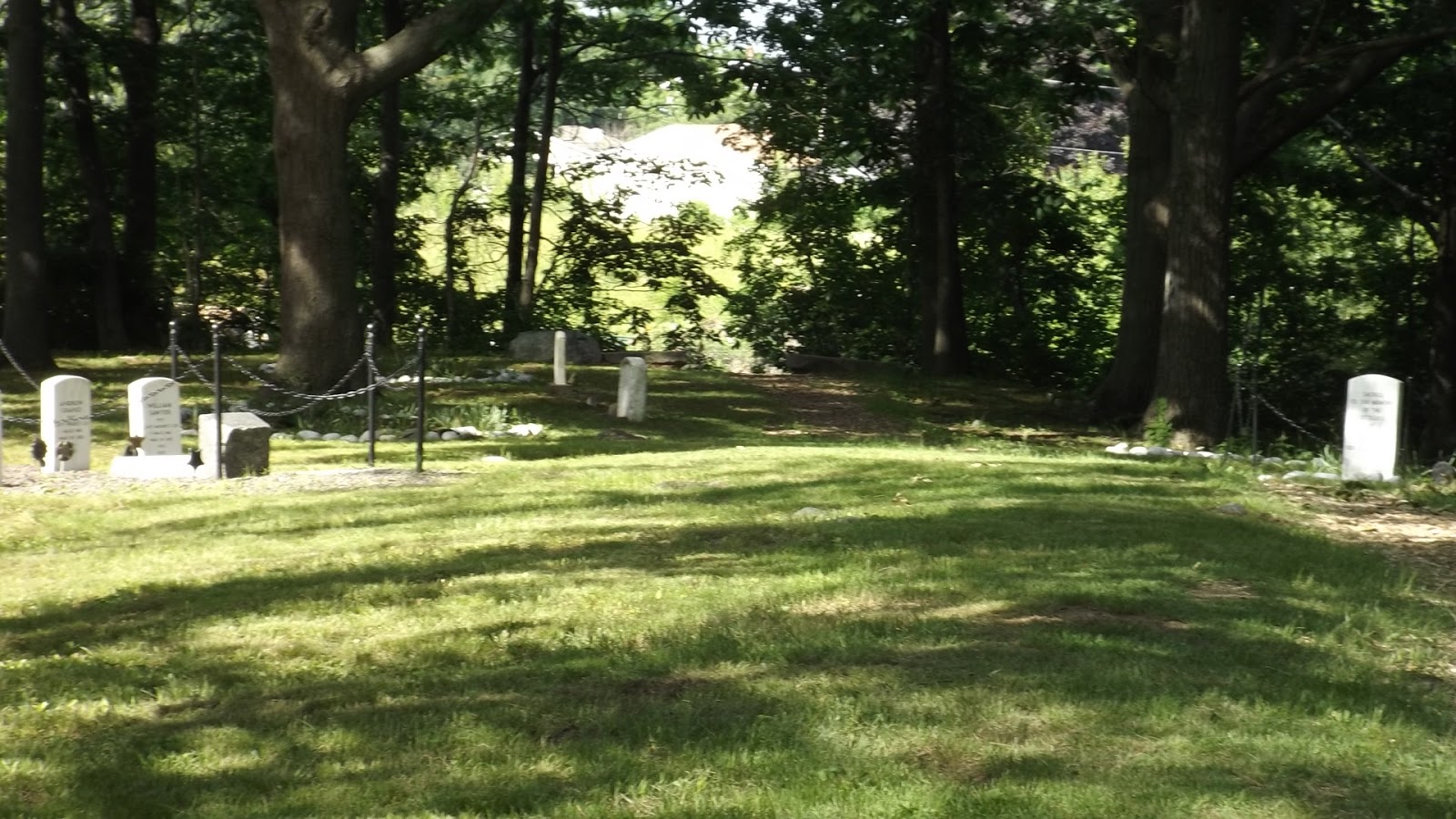
     Thought I would share these photos of the cemetery in June.  School is out, and the cemetery is a quiet , peaceful place for relection.  Many of you who follow this blog have expressed your concern over the years for this ancient burial ground.  Since beginning this project in 2010, I'm pleased that the general condition has been improved and people now seem to respect it for what it is;  the final resting place of some of Portland's first citizens, who resided on Back Cove, and later, East Deering, having come here in the mid-seventeen hundreds, during the era of re-settlement of Falmouth, a colony of Massachusetts Bay Colony.


Recently mowed by the City of Portland's Cemeteries Crews

The Cemetery is well cared for.

Looking out toward the Grand Trunk Veterans Memorial

On the right is the memorial stone dedicated to the early settlers.

The large perennial garden; peonies just opening.

The poppies were particularily lovel this year.
PROJECTS

  •      For several years we have hoped to have a directional sign placed on Presumpscot Street, at the front of the school so that those folks looking for the cemetery could more easily find it.  As you may remember, the young Girl Scouts who recently earned their Girl Scout Bronze Award raised funds toward the cost of a sign.  The funds were donated to the City of Portland Cemeteries Division.

  •      I met with Joseph Dumais at the Cemeteries Office and we agreed, after a site visit, to the location for this sign.  I am also pleased to report that an interactive sign for the cemetery is also in the works. This will include some history of the cemetery with some names and dates.  In may replace the presemt kiosk which is wearing and the plexi-glass scratched., having been damged two years ago by vandals.

  • To preserve the ancient trees in the cemetery and to improve the general environment,  the large, rotted oak tree will be cut down, along with other dead branches.  This should open up the canopy over the right side of the cemetery, hopefully improving the soil in that area as well.


  • Sometime soon, the old chainlink fence will be removed, and a rail fence, in keeping with the design of the cemetery, will be installed.  This will also allow us to cut away invasive plants and dead wood while improving the general appearance and visibilty into the cemetery.  The better the upkeep, the better people respect the sacred space.
     All of these projects are exciting and very welcomed!

***********************************************************************************


      Although I haven't written a new post in a month or so,  I have accumulated a lot of research material on Old Isaac Sawyer, and I intend to post an article soon. Please check out posts on our   Friends of Grand Trunk Cemetery facebook page; leave comments, suggestions, questions.  They are always appreciated and welcomed!

     Finally, for those of you visiting Maine this summer, I hope you will feel so inclined to visit the Grand Trunk Cemetery.  If you visit early in the morning, or late in the day, you may see our resident hen turkey.  Sorry, I wasn't close enough to get a photo, the day she visited.  You never know what spirits lurk!


Sunday, May 27, 2018

Memorial Day 2018

Thanks to Cheryl Willis Patten for posting this photograph.  Although neither of us know the origin of the photo, it  appropriately speaks to the true meaning and significance  of Memorial Day as a day of rememberance of all those, who, from the beginning of our history as a nation, served to preserve and defend our liberty.  
All gave, some gave all!


      I read with interest several articles about the origin of our Memorial Day and will include links for those of you who may wish to read them yourselves:
http.//www.usmemorialday.org/?page_id=2,
https:www.readthespirit.com/explore/the-first-memorial-day-may-1-1865-reported-in-the-charleston

     No matter, what the town of origin for the first celebration, or the actual date, or whether we think of Memorial Day as the unofficial start of the summer season. observing it with picnics or barbecues, family outings or, simply a three day holiday from work and relaxation, the true meaning of the day is sacred.  It is meant to be a day of rememberance and an opportunity to honor those who served in our miltary, and especially those who paid the ultimate price for the liberties we enjoy today.  For many families across the nation, it has also become a day for decorating the graves of loved ones who have passed on.

     At the East Deering/Grand Trunk Cemetery, on Wednesday of this week, a small group gathered to decorate the graves of our interred Veterans and to repeat their names.  I have heard that by saying the names of the dead out loud, they will be remembered always.  I hope so.


PVT. SAMUEL BLAKE:  WAR OF 1812
BORN:  1794, DIED:  1846

PVT. WILLIAM BLAKE:  WAR OF 1812
BORN:  1774, DIED:  1853

PVT. SIMON DAVIS:  REVOLUTIONARY WAR
BORN:  1766, DIED:  1810

PVT. ANDREW GRAVES:  WAR OF 1812
BORN:  1774, DIED:  1860

LEUT. CRISPUS GRAVES, REVOLUTIONARY WAR
BORN:  1742, DIED:  1818

PVT. JOSEPH LUNT, REVOLUTIONARY WAR
BORN:  1757, DIED:  1804

PVT. JOSEPH MERRILL, WAR OF 1812
BORN:  1754, DIED:  1823

PVT. JAMES MOSELEY, US CIVIL WAR
BORN:  1836, DIED:  1892

PVT. JOHN SAWYER, JR., REVOLUTIONARY WAR
WAR OF 1812
BORN:  1760, DIED:  1842

PVT. JOSEPH M. SAWYER, WAR OF 1812
BORN:  1797, DIED:  1876

PVT. WILLIAM SAWYER, WAR OF 1812
BORN:  1763, DIED:  1825

PVT. FRANCIS SMITH, WAR OF 1812
BORN:  1791, DIED:  1840


     Although none of these men died in battle, we remember them for their service and contribution to the history of the city of Portland, the state of Maine and to the Nation.  The names were read aloud, flags placed and wreaths presented and finally, all recited the verses of 'Taps'. 

   Many thanks to the Girl Scouts of Troop 1547 and their Leaders Stacie Partin Hanscom and Mary Beth Lapin, along with our friend Lynda Allshouse for participating in this brief and meaningful ceremony.

Wreath at the graves of Francis Smith and Simon Davis


Wreath at the Grand Trunk Cemetery Veterans Memorial.

Wednesday, May 9, 2018

Going to a Party.....at the Cemetery

Reflecting.....

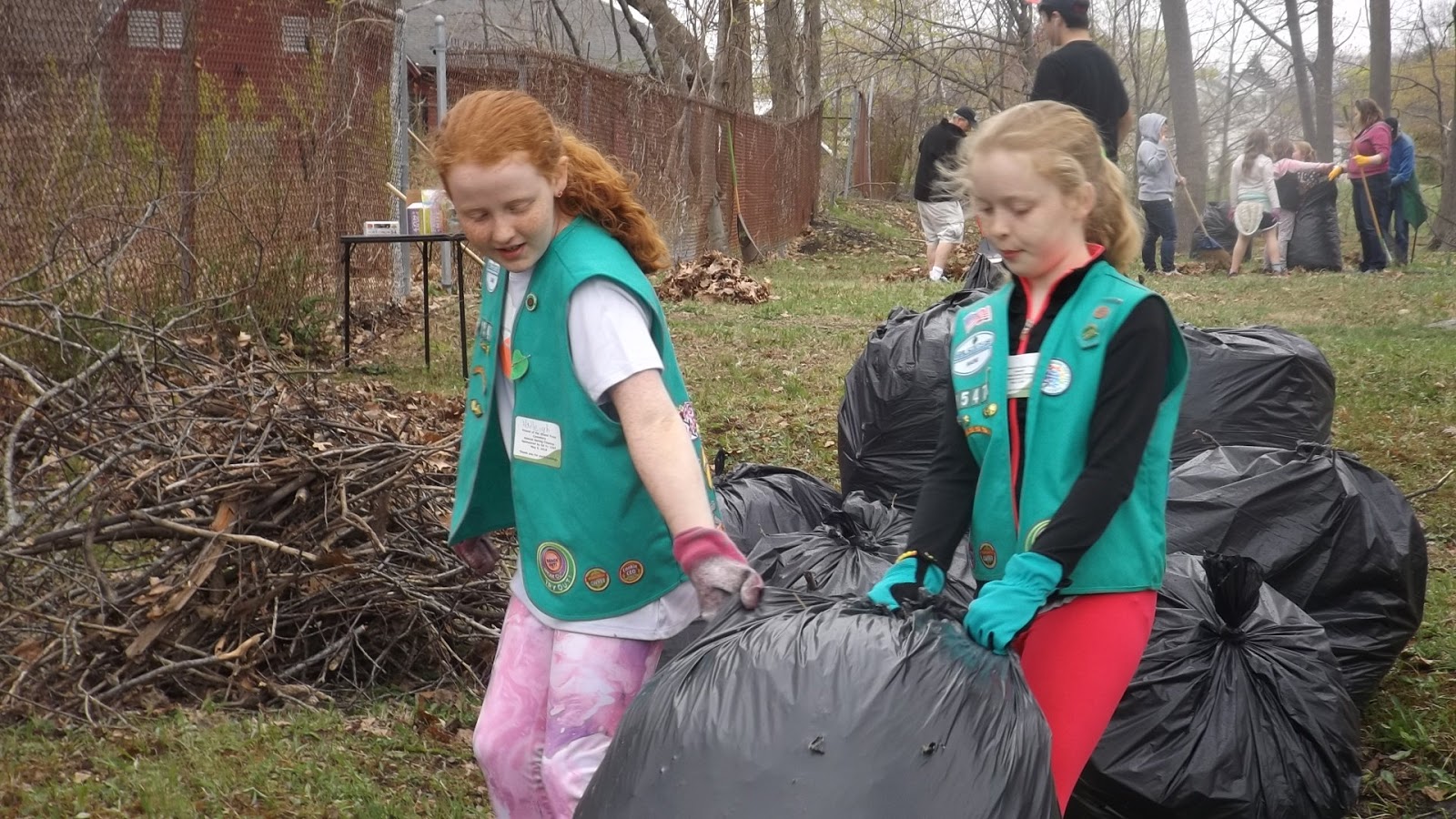
     Sunday, May 6th, 2018, was a day, not unlike today here in Portland, Maine.  It's over-cast with the possibility of showers.  Actually, when I left my house on Melbourne Street, van packed with three portable tables, a dozen rakes, rolls of garden bags, work gloves, water bottles and snacks for the workers, and sundrie other items, it was raining lightly.  I was hoping people would show up and not be discouraged by a few raindrops.  The nine young Junior Girl Scouts had spent many hours planning, preparing and encouraging people to participate in this annual Spring Cleanup at the Grand Trunk Cemetery.

     They would not be disappointed!  About twenty-five children, parents, grandparents, and old 'Friends of the Grand Trunk Cemetery' did come to work, share stories, re-unite, and play.  I borrowed the title of this post from a short article by Jennifer Fulwiler:
I think one of the biggest benefits of these events,.....is the way they give you a sense of comfort about the cycle of life.  There's a palpable sense of connectedness among both the living and the dead.  Those of us still living are connected to one another, and we are connected to those who have passed, just as those who have passed were connected to one another, and to those who died before them.  We recognize names scrawled on name- tags, just as we recognize names carefully chisled on tombstones, and there is a feeling that we're surrounded by loved ones, both those alive on earth, and those alive on the other side.

     Since the very beginning of this project to recover, the remnant of this ancient brial ground, there has always been a sense of celebration; we refer to our fall Planting events as a parties  There has always been a joyous atmosphere and a sense of commaradery while working together for the common purpose of honoring the dead.  

     All of this was so evident this past Sunday with the activities, the hard work, the re-uniting of descendants of those interred here, and the educating of the young who will, hopefully continue to see the importance and value, of caring for our ancient cemeteries.  I'll let the pictures tell the story.


Ben and Norma Sawyer, descendants of Anthony Sawyer, grandson of the first Sawyer, Isaax Sawyer, Sr. who settled here in 1725

MaryAnne Wallace and Lynda Allshouse among the daffodils.


Kayla Theriault began this project in 2010, and continues to support the work at the cemetery

The tables set up in the field with crafts.


Mother and Daughter at the Bake Sale table to raise funds toward the new Cemetery sign.


The old Hoop and Stick game


You've got it, Grandfather!


Engaged in the Historical Scavenger Hunt

Janet Christopher, Machigonne Service Unit Manager has been a great supporter
 from the very start!


It takes team work!


Norma and Ben Sawyer have come out to support every event..


These two Brownie Girl Scouts learned a bit of cemetery history.


A supportive brother and a willing son:  thanks to young Mr. Hanscom!


The girls gather around to recive my thanks for a job well done!

Kayla shares her Girl Scout experiences.

The painted stones are a welcome addition.


Many 'Thanks" to Lilly Denis, Caitlin Rohde, Nora Hansom, Estelle Jones,Sophia Scola, Lindsey Bickford (not in pic),Ally Brady, JoJo Philbrook, Hadleigh McPartlan, and their Leaders:  Staci Hansom and Cheryl Denis.


     Many thanks to all who participated in the Annual Spring Cleanup Party.  This was a wonderful celebration of the living among the souls of those who died long ago in Portland and the East Deering Community.  For those of you who follow this blog, I hope when you are in Portland, you will take a little time to visit the cemetery behind the Presumppscot School.  Enjoy the gardens, sit for a moment and reflect in the quiet and peace of the burial 
site.
There was a bit of giggling from the girls when they read my shirt. 
They thought it read: "I see Dead People"

 An Addition

     I wanted to include the histrical scavenger hunt which the girl conducted for participants.  Thought it might be of interest to folks who might like to visit the cemetery this summer.  Although, for the time being, we've removed the small flags in favor of the traditional graveside flags for Memorial Day, a careful following of the hints, might be helpful and fun.